-200x45.png)
Metal shredders have become essential equipment in today’s rapidly evolving industrial landscape, where metal recycling is no longer just an environmental responsibility but a strategic business advantage. With rising raw material costs, stricter environmental regulations, and increasing demand for sustainable practices, companies are increasingly relying on advanced shredding technology to optimise their operations.
A metal shredder is a powerful machine designed to reduce large metal materials into smaller, manageable pieces for recycling, processing, or disposal. Whether dealing with aluminium, steel, copper, or mixed scrap, a high-performance shredder ensures efficiency, safety, and profitability.
This comprehensive guide explores everything you need to know about metal shredders, including their working principles, types, applications, benefits, and how to choose the right machine for your business.
What Is a Metal Shredder?
A metal shredder is an industrial machine engineered to shred, cut, or tear metal scrap into smaller fragments. These machines are widely used in recycling plants, manufacturing facilities, and waste management operations.
The primary goal of a metal shredder is to
- Reduce the volume of metal waste
- Facilitate easier transportation and storage
- Improve downstream processing efficiency
- Enable material separation and recovery
Modern metal shredders are equipped with advanced technologies such as hydraulic systems, intelligent control panels, and wear-resistant blades, making them highly efficient and durable.


How Does a Metal Shredder Work?
The working principle of a metal shredder is relatively straightforward but highly effective.
- Feeding: Metal materials are fed into the shredder through a hopper.
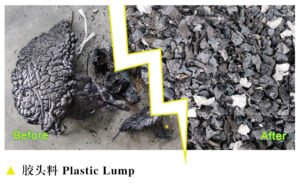
- Cutting/Shredding: Rotating blades or shafts apply shear, tear, and compression forces to break down the material.
- Screening: The shredded material passes through a screen to control output size.
- Discharge: Processed metal is discharged for further handling or recycling.
Depending on the design, shredders may use single-shaft, double-shaft, or four-shaft configurations to achieve different levels of shredding performance.
Types of Metal Shredders
1. Single Shaft Metal Shredder
Single-shaft shredders are ideal for precise and uniform output sizes. They feature a hydraulic pusher that feeds material into a rotating shaft equipped with cutting blades.
Key Features:
- Controlled particle size
- Low-noise operation
- Energy-efficient
- Suitable for light to medium metal scrap
Applications:
- Aluminum profiles
- Thin steel sheets
- Electronic waste
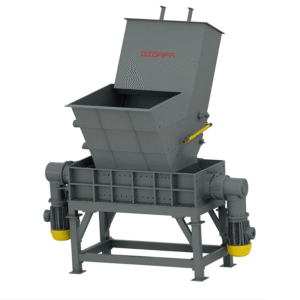
2. Double Shaft Metal Shredder
Double shaft shredders are designed for heavy-duty applications. They use two rotating shafts with interlocking blades to tear apart tough materials.
Key Features:
- High torque output
- Strong crushing capability
- Low speed, high efficiency
Applications:
- Steel drums
- Car shells
- Scrap metal bundles
Key Applications of Metal Shredders
Metal shredders are essential across multiple industries. Their versatility makes them a valuable asset in various sectors:
- Recycling Industry
Metal shredders play a crucial role in recycling facilities by breaking down scrap metal into reusable raw materials. This reduces the need for mining and conserves natural resources.
- Automotive Industry
End-of-life vehicles (ELVs) contain large amounts of metal. Shredders help process car bodies, engines, and components for efficient recycling.
- Manufacturing Industry
Factories generate metal waste during production. Shredders help manage and recycle this scrap efficiently.
- Construction and Demolition
Metal debris from construction sites can be processed and reused, reducing landfill waste.
- E-Waste Recycling
Electronic devices contain valuable metals. Shredders help extract and separate these materials.
Benefits of Using a Metal Shredder
- Increased Efficiency
Shredders significantly reduce the size of metal waste, making it easier to handle, transport, and process.
- Cost Savings
By recycling metal scrap, businesses can reduce raw material costs and generate additional revenue streams.
- Environmental Protection
Metal shredding supports sustainable practices by reducing landfill waste and conserving natural resources.
- Improved Safety
Handling large metal pieces can be dangerous. Shredders minimize risks by processing materials into safer sizes.
- Enhanced Material Recovery
Shredding improves the separation of different metals, increasing recovery rates and profitability.

Key Features to Consider When Choosing a Metal Shredder
Selecting the right metal shredder is critical for achieving optimal performance. Here are the main factors to consider:
- Material Type
Different metals require different shredding capabilities. Consider whether you are processing aluminium, steel, copper, or mixed scrap.
- Capacity Requirements
Evaluate your daily or hourly processing needs to choose a machine with the appropriate throughput.
- Output Size
Determine the desired size of the shredded material for downstream processing.
- Power and Energy Consumption
Energy efficiency is crucial for reducing operational costs.
- Blade Material and Durability
High-quality, wear-resistant blades ensure longer service life and reduced maintenance.
- Automation and Control
Modern shredders offer PLC control systems for easier operation and monitoring.
Maintenance and Operation Tips
Proper maintenance ensures the longevity and efficiency of your metal shredder.
- Regularly inspect blades for wear and replace them when necessary
- Lubricate moving parts to reduce friction
- Monitor hydraulic systems for leaks or pressure issues
- Clean the machine to prevent material buildup
- Train operators for safe and efficient use
Future Trends in Metal Shredding Technology
The metal recycling industry continues to evolve with technological advancements.
- Smart Automation
Integration of IoT and AI allows real-time monitoring and predictive maintenance.
- Energy Efficiency
New designs focus on reducing power consumption while maintaining performance.
- Advanced Materials
Improved blade materials enhance durability and cutting efficiency.
- Environmental Compliance
Machines are being designed to meet stricter environmental regulations worldwide.
Why Choose a Reliable Metal Shredder Manufacturer?
Partnering with an experienced manufacturer ensures you receive high-quality equipment tailored to your needs.
A reputable supplier will offer:
- Custom solutions
- Technical support
- Installation and commissioning services
- After-sales service and spare parts
Maintenance Tips for Metal Shredders
Proper maintenance ensures long-term performance and reliability:
- Regularly inspect and replace blades
- Lubricate moving parts
- Check hydraulic systems
- Clean the machine after use
- Monitor electrical components
Frequently Asked Questions (FAQ) About Metal Shredders
1. What materials can a metal shredder process?
Metal shredders can handle a wide range of materials, including aluminium, steel, copper, iron, and mixed scrap metals. Depending on the machine type, they can also process car bodies, metal drums, pipes, radiators, and even certain types of electronic waste containing metal components.
2. What is the difference between a single-shaft and a double-shaft metal shredder?
A single-shaft metal shredder uses one rotating shaft with a hydraulic pusher, offering controlled output size and uniform particles. A double shaft shredder uses two shafts to tear materials apart, making it more suitable for heavy, bulky, or mixed metal waste without strict size requirements.
3. How do I choose the right metal shredder for my business?
You should consider several factors, including:
- Type and thickness of the metal
- Required output size
- Processing capacity (kg/h or tons/day)
- Budget and energy consumption
- Level of automation
Consulting with a professional manufacturer can help you select the most suitable model.
4. What is the typical output size of shredded metal?
The output size depends on the shredder design and screen size. Single shaft shredders can produce uniform particles ranging from 20mm to 100mm, while double shaft shredders typically produce larger, less uniform pieces.
Conclusion
A metal shredder is an essential investment for businesses involved in recycling, manufacturing, and waste management. By improving efficiency, reducing costs, and supporting sustainability, these machines play a vital role in modern industrial operations.
Choosing the right shredder requires careful consideration of your materials, capacity needs, and operational goals. With the right equipment and proper maintenance, your business can achieve higher productivity and long-term success.