-200x45.png)
Industrial shredders have become indispensable equipment for modern recycling plants, waste management companies, manufacturing facilities, metal processing workshops, plastic recycling factories, and wood processing industries. As environmental regulations become stricter and raw material costs continue to rise, businesses are increasingly investing in industrial shredders to reduce waste volume, improve recycling efficiency, and maximize the value of recyclable materials.
However, choosing the right industrial shredder is not as simple as comparing prices. Different materials require different shredding technologies, cutting systems, power configurations, and machine structures. Selecting the wrong equipment can lead to excessive maintenance costs, poor production efficiency, frequent downtime, and lower profits.
This comprehensive industrial shredder buying guide will help you understand everything you need to know before purchasing an industrial shredder.
What Is an Industrial Shredder?
An industrial shredder is a heavy-duty machine designed to reduce large, bulky, or difficult-to-handle materials into smaller, uniform pieces for recycling, disposal, or further processing.
Industrial shredders are widely used for processing:
- Plastic waste
- Metal scrap
- Wood pallets
- Furniture
- Tires
- Electronic waste (E-waste)
- Paper
- Cardboard
- Textile waste
- Aluminum profiles
- Steel drums
- Woven bags
- Plastic film
- Household waste
- Industrial waste
- Agricultural waste
Unlike ordinary shredders, industrial shredders are built to operate continuously under heavy loads while maintaining stable output and long service life.
Why Choosing the Right Industrial Shredder Matters?
An industrial shredder is much more than a machine for reducing material size. It directly impacts your production efficiency, labor costs, transportation expenses, maintenance requirements, and the quality of recycled materials.
A properly selected shredder can help your business:
- Increase production efficiency
- Reduce labor requirements
- Lower transportation and storage costs
- Produce uniform material sizes for downstream processing
- Extend the lifespan of crushers, granulators, and other equipment
- Improve the value of recyclable materials
- Meet environmental and recycling regulations
Investing time in choosing the right machine can save thousands of dollars in operating costs over its service life.
Why Your Business Needs an Industrial Shredder?
Purchasing the right shredder can significantly improve operational efficiency.
Key benefits include the following:
- Reduce Transportation Costs
Loose waste materials occupy considerable storage and transportation space.
After shredding:
- Higher bulk density
- More material per truck
- Lower logistics costs
- Easier storage
- Increase Recycling Value
Uniform shredded materials are easier to:
- Wash
- Separate
- Sort
- Melt
- Pelletize
- Compress
This increases the market value of recycled materials.
- Improve Production Efficiency
Industrial shredders automate material size reduction, eliminating manual cutting and reducing labor costs.
Benefits include:
- Continuous feeding
- Stable production
- Lower labor requirements
- Faster processing
- Protect Downstream Equipment
Large materials may damage the following:
- Granulators
- Crushers
- Conveyors
- Washing lines
- Extruders
Proper pre-shredding extends equipment lifespan.
-
Meet Environmental Regulations
Many countries now require waste reduction before disposal or recycling.
Industrial shredders help companies comply with environmental standards while reducing landfill waste.
Types of Industrial Shredders
Different applications require different shredding technologies.
-
Single Shaft Shredder
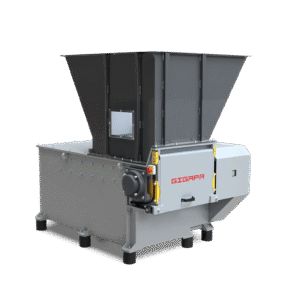
Single-shaft shredders use one rotor equipped with multiple rotating knives and a hydraulic ram to push materials toward the cutting chamber.
Ideal for:
- Plastic lumps
- Plastic pipes
- Plastic pallets
- Woven bags
- Wood
- Paper
- Cardboard
- Textile waste
- Foam
- Rubber
Advantages:
- Uniform output size
- Adjustable screen
- Excellent particle control
- Lower dust generation
- High efficiency
-
Double Shaft Shredder
Double shaft shredders feature two synchronized rotating shafts with high-torque cutters.
Suitable for:
- Metal scrap
- Steel drums
- Aluminum
- Tires
- Household appliances
- Furniture
- Industrial waste
- Car bumpers
Advantages:
- High torque
- Low speed
- Strong tearing force
- Handles bulky materials
- Less risk of blockage

Identify the Materials You Will Process
The first and most important step is understanding exactly what materials you intend to shred.
Industrial shredders are designed for different applications, including:
Plastic Waste
Examples include:
- HDPE drums
- Plastic pallets
- PET bottles
- PVC pipes
- Plastic film
- Woven bags
- Plastic lumps
- Injection molding waste
A single-shaft shredder is usually the preferred solution because it provides controlled particle size and stable feeding.
Metal Scrap
Typical materials include the following:
- Aluminum profiles
- Steel scrap
- Copper wire
- Iron sheet
- Aluminum cans
- Metal drums
Heavy-duty double-shaft shredders are generally recommended because they generate high torque for tearing tough metal materials.
Wood Waste
Applications include:
- Wooden pallets
- Furniture
- Tree branches
- MDF boards
- Construction wood
- Packaging wood
A heavy-duty wood shredder with wear-resistant blades offers the best performance.
Textile Waste
Industrial shredders are widely used for:
- Old clothes
- Cotton waste
- Fabric scraps
- Carpet
- Leather
- Nonwoven materials
These materials require specialized blade designs to avoid wrapping around the rotor.
Electronic Waste
Electronic waste includes:
- Circuit boards
- Computers
- Household appliances
- Electrical cabinets
- Cables
Depending on the material composition, double-shaft shredders are commonly selected.
Determine Your Production Capacity
Capacity directly affects equipment size, motor power, and overall investment.
Common production capacities include:
- 300–500 kg/h
- 500–1000 kg/h
- 1–2 tons/hour
- 3–5 tons/hour
- 5–10 tons/hour
- More than 10 tons/hour
Consider not only your current production needs but also your future expansion plans. Purchasing a machine with moderate capacity reserves can help avoid expensive upgrades later.
Select the Right Motor and Drive System
Motor power determines the machine’s processing ability.
Common motor configurations include:
- 22 kW
- 37 kW
- 55 kW
- 75 kW
- 90 kW
- 132 kW
- 160 kW
- 200 kW+
Machines equipped with variable frequency drives (VFDs) can automatically adjust operating speed according to material load, reducing energy consumption and improving efficiency.
Look for Intelligent Control Systems
Modern industrial shredders are increasingly equipped with PLC control systems.
Useful features include:
- Touchscreen operation
- Automatic overload protection
- Automatic reverse rotation
- Intelligent alarm systems
- Production monitoring
- Emergency stop
- Fault diagnosis
These features improve productivity while reducing downtime and operator workload.
Evaluate Safety Features
Industrial shredders handle powerful cutting forces and should include multiple safety protections.
Important safety features include:
- Emergency stop buttons
- Safety interlock switches
- Motor overload protection
- Automatic reverse function
- Hydraulic pressure monitoring
- Protective covers
- Electrical fault protection
A safe machine not only protects operators but also minimizes production interruptions.
Conclusion
Selecting the right industrial shredder is a strategic investment that can improve operational efficiency, reduce costs, and maximize recycling profits. By carefully evaluating your materials, production capacity, output requirements, blade quality, energy efficiency, safety features, and supplier capabilities, you can choose equipment that delivers reliable performance for many years.
If you are looking for a dependable industrial shredder backed by professional engineering and responsive after-sales service, GIGAPA is ready to help. Our experienced team can recommend the ideal shredding solution for your specific application and provide customized equipment to meet your business needs.