-200x45.png)
Hydraulic baling machines are playing a critical role in transforming today’s recycling industry. With the global demand for sustainable waste management continuing to rise, recycling companies are facing stricter environmental regulations, higher transportation costs, increasing labor shortages, and growing pressure to improve operational efficiency. As a result, more businesses are investing in advanced baling solutions that reduce costs while maximizing recycling productivity.
Among all recycling equipment, the hydraulic baling machine has become one of the most valuable investments for recycling centers, waste management companies, manufacturers, logistics warehouses, retail distribution centers, and scrap processing facilities.
In 2026, one of the biggest trends in the recycling industry is the integration of automation, intelligent control systems, and energy-efficient hydraulic technology into baling equipment. Companies are no longer simply looking for machines that compress waste—they need solutions that reduce labor, optimize transportation, improve bale quality, and maximize the value of recyclable materials.
Why Hydraulic Baling Machines Are More Important Than Ever
Around the world, recyclable materials continue to increase every year.
Industries generate enormous quantities of:
- Cardboard cartons
- Plastic film
- PET bottles
- HDPE containers
- Aluminum cans
- Steel scrap
- Textile waste
- Cotton waste
- Paper waste
- Agricultural plastics
Without proper compaction, these materials occupy valuable warehouse space and dramatically increase transportation costs.
A hydraulic baling machine solves this problem by compressing loose materials into dense, uniform bales that are easier to:
- Store
- Transport
- Load
- Sell
- Recycle
For many recycling companies, transportation costs account for a significant portion of operating expenses. Increasing bale density can reduce the number of truckloads required, resulting in substantial savings over time.
2026 Industry Trends Driving Demand for Hydraulic Balers
Several global trends are accelerating the adoption of modern baling machines.
- Rising Transportation Costs: Fuel prices and freight rates remain volatile worldwide.Higher-density bales allow businesses to transport significantly more recyclable material per shipment, lowering freight costs and improving overall logistics efficiency.
- Automation Is Becoming Standard. Modern hydraulic balers now feature the following:
- PLC intelligent control
- Touchscreen operation
- Automatic tying systems
- Automatic feeding
- Remote monitoring
- Fault diagnosis
- Safety interlock protection
Automation reduces manual intervention and enables continuous operation, especially for high-volume recycling facilities.
- Sustainability Goals: Governments and multinational companies continue to strengthen ESG (Environmental, Social, and Governance) initiatives.Efficient waste compaction supports sustainability by:
- Reducing landfill waste
- Lowering carbon emissions from transportation
- Improving recycling rates
- Supporting circular economy programs
Many companies now include recycling efficiency as part of their sustainability reporting.
- Labor Shortages: Many recycling facilities face difficulty recruiting workers.Automatic horizontal balers can dramatically reduce labor requirements by handling continuous feeding and automatic bale tying, allowing operators to manage larger volumes with fewer personnel.
How Does a Hydraulic Baling Machine Work?
Although different models vary, the operating principle is straightforward.
Step 1
Loose recyclable materials are loaded into the feeding chamber.
Step 2
The hydraulic cylinder drives the compression ram.
Step 3
High hydraulic pressure compresses materials into dense blocks.
Step 4
After reaching the preset density, the bale is tied automatically or manually.
Step 5
The finished bale is ejected for storage or transportation.
Modern PLC systems automatically monitor the following:
- Pressure
- Stroke
- Bale density
- Cycle time
- Safety conditions
This ensures stable performance and consistent bale quality.
Types of Hydraulic Baling Machines
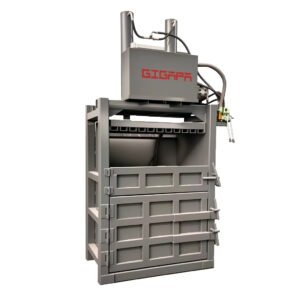
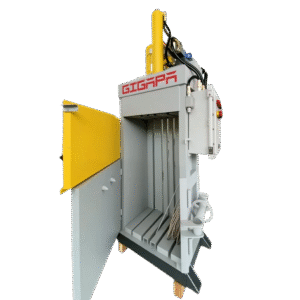
- Vertical Baling Machine: Vertical balers are ideal for small and medium-sized businesses.Common applications include:
- Retail stores
- Hotels
- Warehouses
- Supermarkets
- Packaging factories
- Distribution centers
Advantages:
- Compact footprint
- Lower investment cost
- Easy installation
- Simple operation
- Suitable for cardboard, plastic film, paper, and textiles
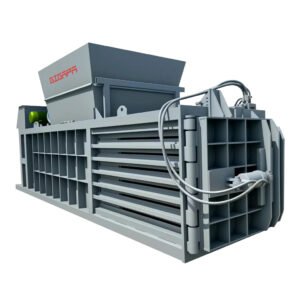
- Horizontal Baling Machine: Horizontal balers are designed for continuous production.Typical users include:
- Recycling plants
- Material Recovery Facilities (MRFs)
- Large manufacturers
- Waste transfer stations
- Paper mills
Advantages include:
- High processing capacity
- Continuous feeding
- Automatic operation
- Stable bale dimensions
- Reduced labor costs
- Fully Automatic Baling Machine: Automatic balers integrate the following:
- Conveyor feeding
- Automatic compression
- Automatic tying
- Automatic bale discharge
These machines are suitable for 24-hour industrial operation.

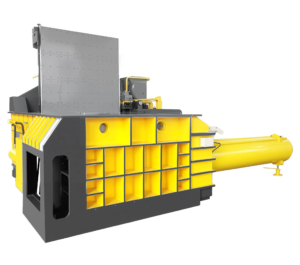
- Metal Baler: Metal balers compress the following:
- Aluminum scrap
- Steel scrap
- Copper
- Iron
- Beverage cans
- Automotive scrap
Compressed metal occupies much less space and achieves higher market value.
Key Benefits of Using a Hydraulic Baling Machine
- Lower Transportation Costs: High-density bales maximize truck utilization.Businesses can transport more recyclable material using fewer shipments.
- Improved Warehouse Management: Loose waste quickly occupies valuable storage space.Compressed bales are stackable, organized, and easier to manage.
- Higher Recycling Value: Many recycling buyers prefer clean, uniform, high-density bales.Well-formed bales often receive better market prices than loose materials.
- Increased Productivity: Automatic balers operate continuously with minimal downtime.Processing efficiency improves significantly compared with manual waste handling.
- Better Workplace Safety: Loose waste piles create hazards.Organized bale storage reduces:
- Fire risks
- Tripping hazards
- Forklift accidents
- Reduced Labor Costs: Automation minimizes manual handling.One operator can supervise equipment that previously required multiple workers.
Materials Suitable for Hydraulic Balers
Modern balers process a wide variety of recyclable materials.
These include:
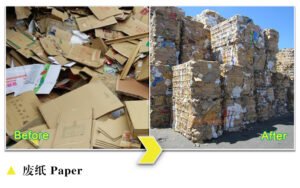
Paper
- OCC cardboard
- Newspapers
- Office paper
- Mixed paper
Plastics
- PET bottles
- Plastic film
- Woven bags
- HDPE containers
- PP bags

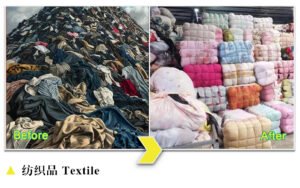
Textile Waste
- Used clothing
- Cotton
- Fabric scraps
- Nonwoven materials
Metal
- Aluminum cans
- Steel scrap
- Copper
- Aluminum profiles
- Stainless steel

Agricultural Waste
- Silage film
- Fertilizer bags
- Greenhouse plastics

How to Choose the Right Hydraulic Baling Machine
Choosing the correct baler depends on several factors.
- Processing Capacity Estimate daily or hourly waste generation.For example:Small businesses:
- 100–500 kg/day
Medium factories:
- 1–5 tons/day
Large recycling facilities:
- 20–100 tons/day or more
- Material Type: Different materials require different compression forces.Plastic film behaves differently from metal scrap.Selecting equipment specifically designed for your material ensures better performance.
- Bale Size: Larger bales reduce transportation costs but require larger handling equipment.Ensure bale dimensions match forklifts, containers, and customer requirements.
- Automation Level Questions to consider:Do you need:
- Manual loading?
- Conveyor feeding?
- Automatic tying?
- Remote monitoring?
- Fully unattended operation?
- Hydraulic Pressure: Higher hydraulic pressure generally produces denser bales.However, larger hydraulic systems also consume more power.Choose a balance between productivity and energy efficiency.
Why Choose GIGAPA Hydraulic Baling Machines?
At GIGAPA, we specialize in manufacturing reliable recycling equipment for customers worldwide.
Our product range includes:
- Vertical Baling Machines
- Horizontal Baling Machines
- Fully Automatic Balers
- Metal Balers
- Marine Waste Baling Machines
- Hydraulic Cylinders
- Complete Recycling Solutions
Our advantages include:
- More than 10 years of manufacturing experience
- Customized solutions for different industries
- High-quality hydraulic systems
- Durable steel construction
- Stable performance
- Professional technical support
- Global export experience
- Competitive factory pricing
Whether you operate a recycling plant, manufacturing facility, warehouse, logistics center, or waste management company, GIGAPA can help you improve recycling efficiency while reducing operating costs.
Conclusion
The recycling industry is evolving rapidly, and hydraulic baling machines have become essential equipment for businesses seeking greater efficiency, lower transportation costs, and higher recycling profits.
With advances in automation, intelligent control, and energy-saving hydraulic technology, today’s balers deliver much more than simple waste compaction—they provide long-term value through improved productivity, reduced labor requirements, enhanced sustainability, and stronger financial returns.
As environmental regulations tighten and recyclable material volumes continue to grow, investing in the right hydraulic baling machine is no longer just an equipment upgrade; it is a strategic decision that can strengthen your business for years to come.