-200x45.png)
Choosing the right single-shaft crusher is essential for improving waste processing efficiency, reducing operating costs, and achieving the desired output size. Whether you process plastic waste, wood scraps, textiles, or industrial waste, selecting suitable equipment can help optimize your production process.
With different machine configurations available, how do you find the right single-shaft crusher for your business? Here are the key factors to consider before making a purchase.
Identify the Material You Need to Process
Different materials require different crushing configurations. Before selecting a machine, identify the type and characteristics of your material.
- Plastic waste: Suitable for many plastic lumps, pipes, containers, and production scraps.
- Wood waste: Used for processing wooden pallets, boards, and wood offcuts.
- Textile waste: Can process old clothes, fabric scraps, and certain carpets.
- Industrial waste: Suitable for selected manufacturing residues and discarded materials.
Consider material size, hardness, moisture content, and possible contaminants. Providing photos or videos to the manufacturer can help determine the most suitable machine configuration.
Determine the Required Processing Capacity
Processing capacity directly affects production efficiency. Choose a single-shaft crusher that matches your hourly or daily processing requirements.
Actual capacity depends on material properties, feeding conditions, blade design, motor power, and screen openings.
Avoid choosing a machine based only on its advertised maximum capacity. Instead, discuss your actual production targets with the manufacturer to find a suitable model.
Choose the Right Output Size
The required output size depends on your next processing step. For example, plastic waste may need to be shredded before entering a granulator, while wood waste may require a specific size for further treatment.
A screen helps control the discharged particle size. Smaller screen openings can produce smaller particles but may reduce processing capacity.
Before purchasing, confirm the target output size and whether additional crushing or grinding equipment is necessary.
Check Motor Power and Cutting Performance
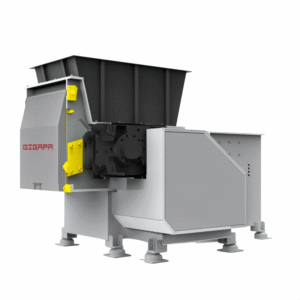
Motor power, rotor design, and blade quality are important factors when selecting a single-shaft crusher.
Consider these key components:
- Motor: Provides the power required for material processing.
- Rotor and blades: Affect cutting efficiency and wear resistance.
- Hydraulic pusher: Helps feed material toward the cutting rotor.
- Screen: Helps control the output size.
- Control system: Supports safe operation and may include overload protection.
The best configuration depends on your material and production requirements. Higher motor power does not always mean better performance, so evaluate the complete machine rather than one specification alone.
Consider Maintenance and Operating Costs
Besides the purchase price, consider the long-term costs of operating your equipment.
Check blade replacement requirements, screen maintenance, electricity consumption, spare parts availability, and routine servicing needs.
A machine that is easy to maintain and suitable for your application can help reduce downtime and improve long-term operating efficiency.
Choose a Reliable Manufacturer
Selecting an experienced manufacturer helps ensure that your equipment matches your processing needs.
Before purchasing, review the machine specifications, overall dimensions, power requirements, installation conditions, and technical support options.
Compare different models based on their actual performance and suitability for your material rather than focusing only on price.
Select an Experienced Single-Shaft Crusher Manufacturer
A reliable manufacturer should do more than provide a machine catalogue. The supplier should understand your application and help identify a suitable configuration.
Before making a purchase, consider these questions:
- Does the manufacturer have experience producing industrial shredding equipment?
- Can it recommend a model based on your material and capacity requirements?
- Are technical specifications and machine drawings available?
- Can the equipment be configured for your particular application?
- Are spare parts and technical support available?
- Can the supplier explain installation and maintenance requirements?
Avoid making a decision based solely on a product photograph or general specification sheet. Two machines with similar motor power may deliver different results because of differences in rotor design, feeding systems, cutting tools, and overall construction.
Providing detailed application information will help the manufacturer recommend a more appropriate solution.
How to Choose the Right Single-Shaft Crusher for Your Business
To simplify the selection process, start by defining your material, required capacity, and target output size. Then compare machine configurations, power requirements, maintenance considerations, and manufacturer support.
A practical selection process includes five steps:
- Identify the material and its physical characteristics.
- Determine the required processing capacity.
- Define the target output particle size.
- Confirm machine configuration, power, and installation requirements.
- Compare technical specifications, operating costs, and supplier support.
The best single-shaft crusher is not necessarily the largest or most powerful model. It is the machine that matches your material, production goals, available space, and budget.
Why Choose GIGAPA Single-Shaft Crushers?
GIGAPA specializes in industrial machinery, including shredders, baling machines, and hydraulic equipment. With more than 10 years of team experience in research and development and manufacturing, we provide equipment solutions for various industrial applications.
Our Single-Shaft Crushers can be evaluated according to material type, processing capacity, output size, and production requirements.
Whether you need to process plastic waste, wood scraps, textile waste, or other suitable materials, GIGAPA can help you explore equipment options for your business.
Frequently Asked Questions (FAQs)
1. What materials can a single-shaft crusher process?
Depending on its configuration, a single-shaft crusher can process various plastics, wood waste, textiles, foam, and other suitable industrial materials. Confirm material compatibility with the manufacturer before purchasing.
2. What is the difference between a single-shaft crusher and a double-shaft shredder?
A single-shaft crusher typically uses a rotating cutting rotor and a screen to help control output size. A double-shaft shredder uses two rotating shafts to tear and shear material. The appropriate choice depends on the material, required output size, and processing objectives.
3. How do I determine the capacity I need?
Estimate your hourly or daily material volume and consider operating hours, feeding conditions, and the required output size. Ask the manufacturer to recommend a suitable configuration based on your actual material.
4. Can a single-shaft crusher produce a uniform particle size?
A screen helps control the output size, but the final particle distribution also depends on the material, blade condition, rotor design, and operating parameters.
5. Can a single-shaft crusher be customized?
Depending on the manufacturer and application, options may include different motor configurations, rotor designs, screen openings, feeding arrangements, and other components. Discuss your requirements with the supplier to confirm available options.
Choosing the right single-shaft crusher starts with understanding your material and production requirements. With proper equipment selection and support from an experienced manufacturer, your business can improve material handling, optimize processing efficiency, and build a more effective waste recycling system.