-200x45.png)
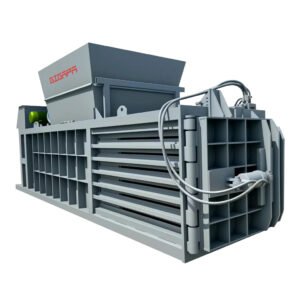
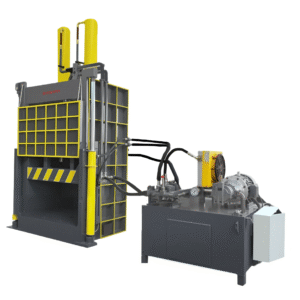
The vertical hydraulic baler is a piece of equipment primarily used for recycling and compressing packaging materials and waste such as corrugated cardboard, waste film, waste paper, foam plastic, beverage cans, and industrial scrap.
The vertical hydraulic baler reduces waste storage space, saving up to 80% of stacking space, lowering transportation costs, and contributing to environmental protection and waste recycling.
Key Features
- Hydraulic compaction, manual loading, manual button operation
- Fully preserves the physical properties of the material
- Waste compaction ratio up to 5:1
- Two bale paths for easy operation
- Anti-rebound hook to maintain compression effect
- Automatic return of the press plate
Working Principle:
- Material Loading: Operators place the materials to be baled into the baler’s hopper.
- Compression Process: After activating the hydraulic system, the hydraulic cylinder uses oil pressure to lower the baler’s ram, compressing the materials. A compression force of 60 tons effectively compresses large volumes of materials into compact bales for subsequent processing.
- Baling: Once the material is compressed to the set dimensions, the machine automatically performs baling. Baling materials typically use plastic straps or steel bands to ensure the compressed material does not scatter.
- Unloading: After baling is complete, operators can use the control system to unload the baled material for subsequent transportation or storage.
Structural Features:
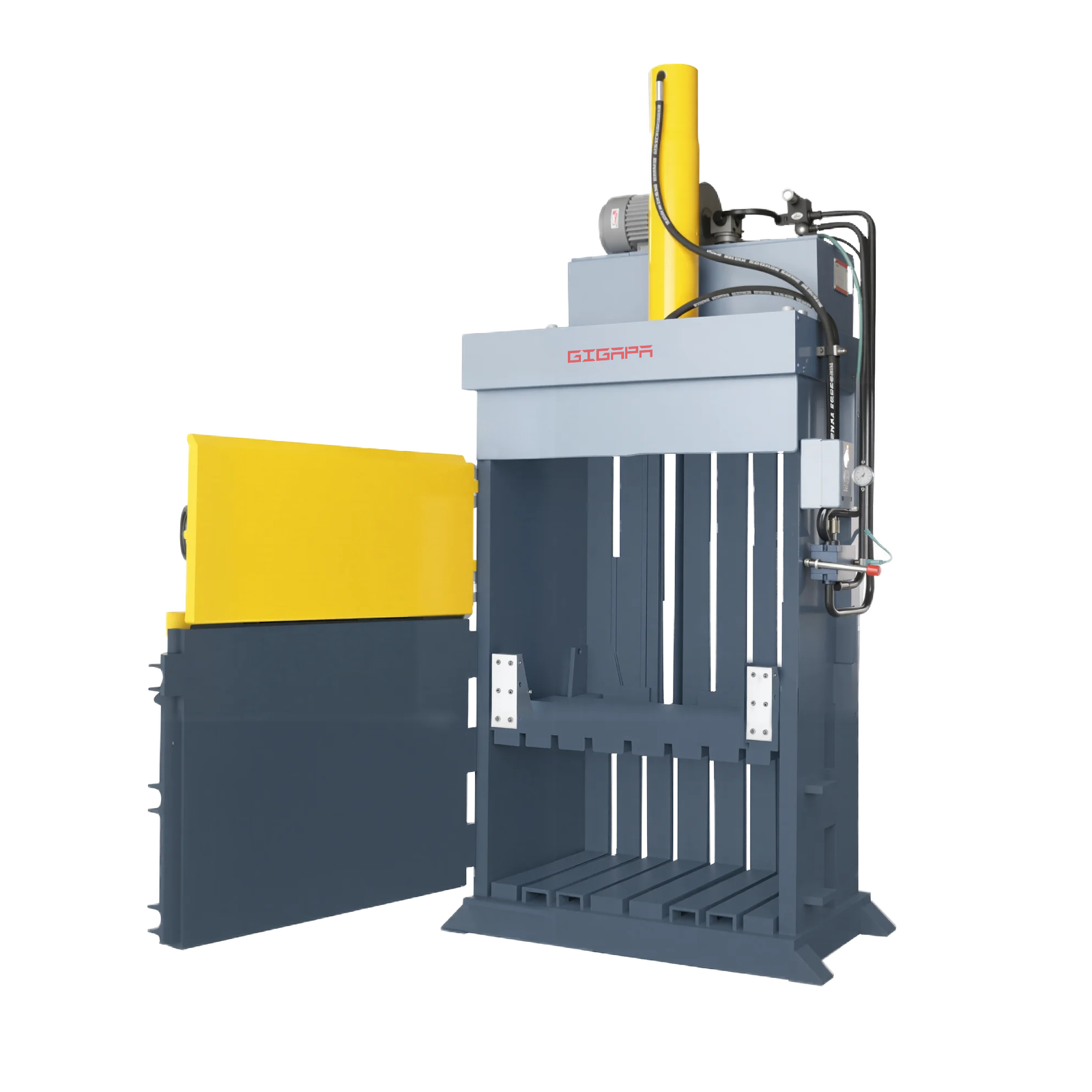
- Hydraulic System: The hydraulic system is the core component of the vertical hydraulic baler, responsible for providing the required pressure. Components such as the hydraulic pump, hydraulic cylinder, and oil tank form an efficient hydraulic system, ensuring stable baling operations.
- Baling Chamber: The baling chamber is the area where materials are loaded and compressed. A well-designed baling chamber can accommodate larger volumes of materials, enhancing operational efficiency.
- Control System: Modern balers are equipped with intelligent control systems, offering simple operation, enabling automation, reducing manual intervention, and improving production efficiency.
- Frame Structure: The frame of the baler is typically made of high-strength steel, ensuring the stability and durability of the equipment.
Application Areas:
- Waste Management: In the waste management industry, vertical hydraulic balers can compress waste materials such as paper, plastic, and metal, facilitating transportation and further processing.
- Logistics Industry: In the logistics industry, vertical hydraulic balers can effectively package goods, improve warehouse space utilization, and reduce transportation costs.
- Manufacturing Industry: In the manufacturing industry, vertical hydraulic balers can be used to compress scrap materials generated during production, reduce environmental pollution, and improve resource utilization.
Usage Precautions:
- Before operation, ensure that the equipment is properly installed and all components are in good condition.
- Wear appropriate protective equipment during operation to ensure safety.
- Regularly inspect critical components such as the hydraulic system and control system to ensure the equipment operates normally.

Common Faults of Vertical Hydraulic Balers
1. The machine does not operate, but the pump is still running
- The motor is rotating in the wrong direction. Check the motor’s rotation direction;
- The motor voltage is too low to operate normally under the current load. Check the voltage;
- Check the hydraulic lines for hose leaks or kinks;
- Check the pump coupling to ensure the keyway is not separated from the pump shaft;
Check if there is sufficient hydraulic oil in the tank (the oil level should be above the midpoint of the tank volume); - The tank’s suction filter or the vent cap on top may be clogged;
- Check if the suction line assembly is loose, if there are hairline cracks at the pump’s suction port, and if the suction line should always have oil without bubbles;
2. The machine runs too slowly
- Something is blocking the suction filter, vent cap, or pressure filter, or the hose is pinched;
- Motor voltage is too low;
- The hydraulic oil is too thin or too thick.
3. Motor overheats
- Wiring is incorrect;
- Pump overheats due to oil shortage;
- The hydraulic oil is too thin or too thick.
4. Oil leakage or oil spraying from the tank
The vent hole is blocked, causing increased tank pressure and oil to spray out. Clean the vent hole or replace the vent device.
5. The machine cannot operate; the motor cannot run
- The control fuse is blown;
- The motor starter is overloaded and tripped. Press the “Reset” button on the controller;
- The lead fuse is blown;
- Check the transformer;
- Check the button.
Conclusion
Vertical hydraulic balers are essential machines for efficiently managing waste materials in industries such as recycling, logistics, and manufacturing. By compressing packaging materials like cardboard, paper, plastics, and scrap, these balers reduce storage space, lower transportation costs, and contribute to sustainable waste management. With key features such as hydraulic compaction, high compaction ratios, and user-friendly controls, the vertical hydraulic baler ensures efficient operation while preserving material integrity. Proper installation, regular maintenance, and attention to operational safety are crucial to maximizing the baler’s performance and longevity. Whether used in waste management, logistics, or manufacturing, the vertical hydraulic baler plays a vital role in streamlining operations and supporting environmental sustainability.