-200x45.png)
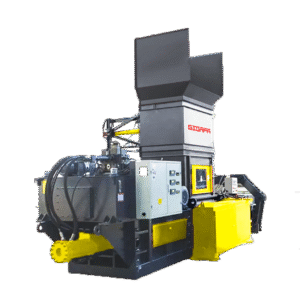
A empacadora horizontal totalmente automática is an efficient solution for businesses that need to compress large volumes of recyclable and waste materials into compact, uniform bales. Compared with manual and semi-automatic baling machines, a fully automatic horizontal baler can provide continuous operation, reduce manual handling, improve bale consistency, and increase overall processing efficiency.
For recycling companies, paper mills, waste management facilities, packaging factories, textile manufacturers, and other industrial users, selecting the right baler is an important investment decision.
However, not every automatic horizontal baler is suitable for every application. Material characteristics, required capacity, bale dimensions, automation level, hydraulic system, feeding method, and installation conditions should all be considered before purchasing.
This guide explains the key factors buyers should understand when choosing a fully automatic horizontal baler.
¿Qué es una empacadora horizontal totalmente automática?
A fully automatic horizontal baler is an industrial hydraulic machine designed to compress loose materials into dense rectangular bales.
The machine generally consists of a feeding system, compression chamber, hydraulic system, control system, bale tying or strapping system, and bale discharge mechanism.
Depending on the configuration, the entire process can be automated:
- Materials are fed into the machine.
- The hydraulic system compresses the materials.
- The compressed material forms a bale.
- The bale is automatically tied or strapped.
- The finished bale is discharged from the machine.
- The next cycle begins automatically.
This continuous process makes the machine particularly suitable for high-volume recycling applications.
What Materials Can a Fully Automatic Horizontal Baler Process?
One of the first questions buyers should ask is whether the machine is suitable for their specific material.
Fully automatic horizontal balers can be used for many recyclable and compressible materials, including:
- Waste cardboard
- OCC
- Waste paper
- Newspapers and magazines
- Película de plástico
- Botellas PET
- Envases de plástico
- Residuos textiles
- Algodón
- Agricultural materials
- Industrial packaging waste
Different materials have different densities and compression characteristics. Therefore, the same machine configuration may not provide the same performance for every material.
For example, loose cardboard requires a different feeding and compression solution from lightweight plastic film. Textile waste may also require a specific feeding system to prevent material bridging or uneven feeding.
For this reason, buyers should provide detailed material information when requesting a quotation.
How to Choose the Right Baler Capacity?
Capacity is one of the most important specifications when selecting a fully automatic horizontal baler.
Manufacturers may describe machine capacity in kilograms per hour, tons per hour, or bales per hour. However, capacity should always be evaluated together with the material type and bale specifications.
Before selecting a machine, determine:
- Average material volume per day
- Peak material volume
- Required processing capacity per hour
- Horas de trabajo al día
- Expected future production growth
For example, if your facility needs to process several tons of cardboard every day, choosing a small-capacity machine simply because its purchase price is lower may create a production bottleneck.
It is generally better to select a machine based on your actual production requirements rather than focusing only on the initial equipment price.
Bale Size and Bale Weight Matter
The required bale size should also be confirmed before purchasing an automatic horizontal baling machine.
Bale dimensions affect:
- Storage space
- Transporte
- Eficacia de carga
- Bale handling
- Customer requirements
- Recycling value
Some buyers need relatively small bales that can be easily handled by workers or forklifts, while large recycling facilities may prefer heavier and denser bales for efficient transportation.
You should therefore determine the required bale dimensions and target bale weight in advance.
If your recycled materials are sold to another processing facility, it is also useful to confirm whether your customer has specific requirements for bale size, weight, or density.
Consider the Feeding System.
The feeding system can have a major impact on the performance of a fully automatic baler.
For high-volume applications, a conveyor is commonly used to transport material continuously into the baling machine.
Depending on the application, the feeding system may include:
- Cintas transportadoras
- Transportadores de cadena
- Feeding hoppers
- Automatic loading systems
- Customized conveyor systems
The conveyor dimensions, speed, and feeding height should match the production line.
For example, if the baler is installed after a shredder, sorting system, or recycling line, the feeding system should be designed according to the output of the previous equipment.
A well-designed feeding system can help reduce material accumulation and improve the continuity of the entire production process.
Hydraulic System and Compression Force
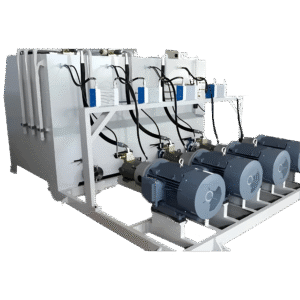
The hydraulic system is the core of a hydraulic horizontal baler.
The compression force determines how effectively the machine can compact different materials. However, a higher hydraulic force is not automatically better for every application.
The appropriate compression force depends on:
- Tipo de material
- Densidad del material
- Bale size
- Required bale weight
- Desired bale density
- Production capacity
Buyers should therefore discuss the complete application with the manufacturer instead of selecting a machine based only on the maximum hydraulic pressure.
A reliable hydraulic system should also provide stable operation during continuous production.
Automatic Tying and Bale Discharge
For a truly automated production line, the bale tying and discharge systems are important.
After compression, the machine needs to secure the bale so that it can be transported and stored without losing its shape.
Depending on the machine design, automatic tying can reduce the need for workers to manually strap each bale.
Automatic bale discharge also helps maintain continuous production.
When comparing different machines, ask the supplier exactly which processes are automated. Some machines may be described as automatic while still requiring manual intervention for certain operations.
Understanding the complete automation process can help you make a more accurate comparison.
Electrical and Installation Requirements
Before ordering a fully automatic horizontal baler, buyers should confirm the electrical requirements.
Important information includes:
- Voltage
- Frequency
- Phase
- Potencia del motor
- Total installed power
- Control cabinet requirements
Electrical standards vary between countries, so the manufacturer should configure the machine according to the customer’s local requirements.
Installation space should also be considered.
A horizontal baler may require additional space for:
- Material feeding
- Conveyor installation
- Bale discharge
- Forklift operation
- Mantenimiento
- Electrical equipment
Providing a factory layout to the manufacturer can help determine the most appropriate machine arrangement.
Conclusión
Selecting the right fully automatic horizontal baler requires a comprehensive evaluation of your material, production capacity, bale requirements, feeding system, hydraulic configuration, automation level, installation conditions, and long-term maintenance needs.
For high-volume recycling and industrial applications, a properly configured automatic horizontal baling machine can improve production efficiency while reducing manual handling and storage requirements.
Instead of choosing a machine based only on price or hydraulic pressure, buyers should compare complete machine configurations and consider the long-term operating requirements of their facility.
GIGAPA provides hydraulic baling solutions for different recyclable materials and industrial applications. If you are looking for a fully automatic horizontal baler, send us your material type, required capacity, bale size, and other requirements. Our team can recommend a suitable machine configuration and provide technical details and a quotation.