-200x45.png)
1. Introduction: The Challenge in Cotton Linter Processing
Cotton linters, the short fibers that remain attached to the cottonseed after ginning, are widely used in industries such as medical cotton, absorbent materials, cellulose production, and high-grade paper manufacturing. However, before these linters can be used for such applications, they must undergo a series of purification and refinement processes to remove impurities, waxes, oils, and contaminants.
In recent years, manufacturers have introduced multi-stage cutting and mechanical separation methods to improve the purity of raw cotton linters before chemical treatment. While these improvements have significantly enhanced product quality, they also created new challenges in handling and packaging the resulting fluffy, lightweight, and voluminous materials.
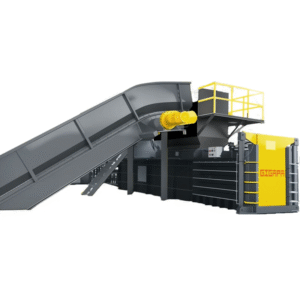
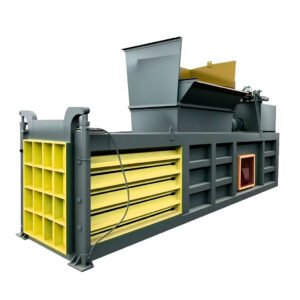
This is where the fully automatic horizontal baler becomes a key part of the production line. It ensures that purified cotton linters are efficiently compressed, hygienically packed, and ready for transportation or storage — all while maintaining the product’s integrity and cleanliness.
2. The Cotton Linter Purification Process Overview
Before we dive into the benefits of the fully automatic horizontal baler, it’s essential to understand the process leading up to it. A typical cotton linter purification line includes the following stages:
-
Raw Material Preparation:
Cotton linters are opened and cleaned to remove coarse impurities like husks and dust. -
Multi-stage Cutting:
The fibers are subjected to first, second, and even third-stage cutting to achieve a uniform size — typically small enough to pass through a 2,500-micron sieve. This step helps expose more surface area for subsequent purification. -
Mechanical Separation:
Using airflow classifiers or vibrating screens, the cut linters are divided into clean fibers and impure residues. Only the clean portion moves forward in the process. -
Chemical Purification:
The clean cotton linters are boiled, bleached, and neutralized to remove residual wax, oil, and pigments. -
Drying and Fiber Refinement:
After chemical treatment, the cotton is dehydrated, dried, and re-opened to restore its soft, fluffy texture. -
Secondary Cutting and Dust Removal:
To achieve uniform fiber quality and control static buildup, a secondary cutting or fiber conditioning stage is introduced. -
Final Step – Compression and Packaging:
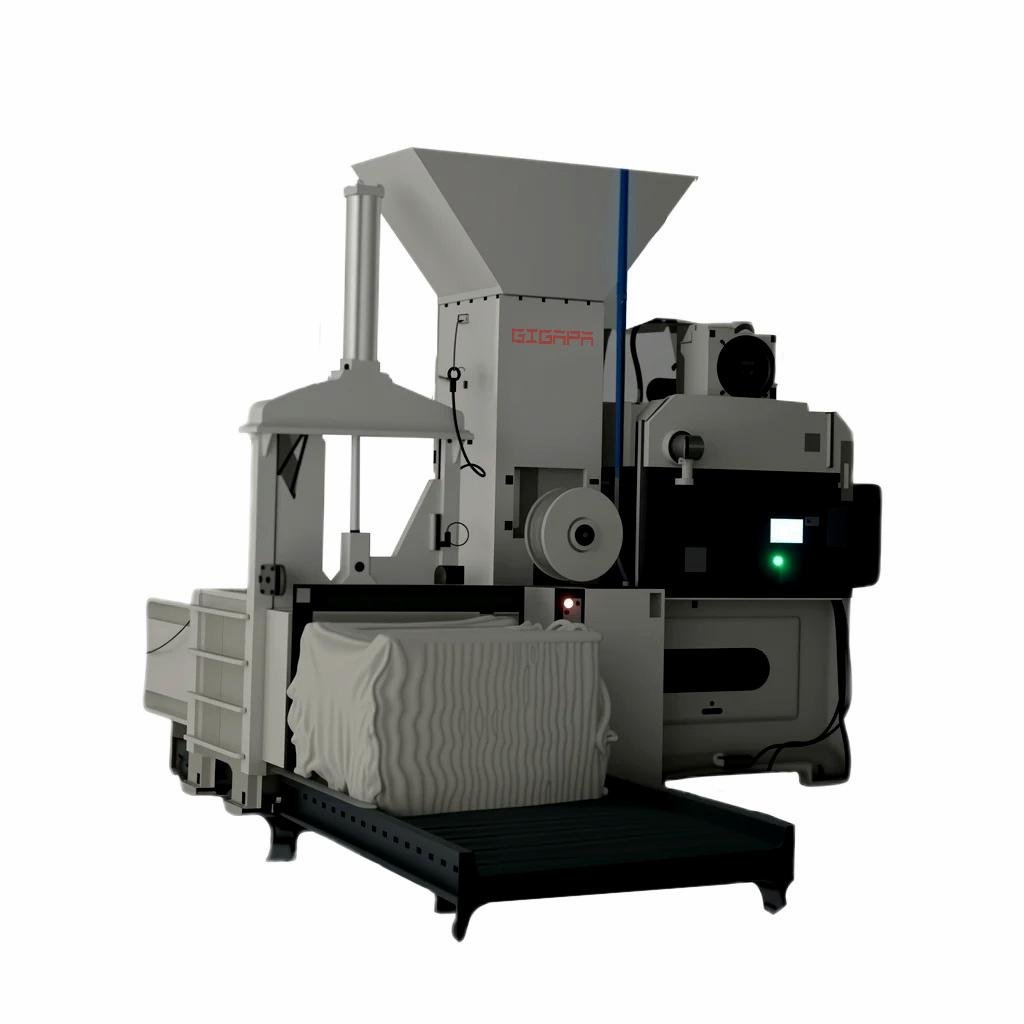
The fully automatic horizontal baler compresses the lightweight cotton fibers into dense, uniform bales that are clean, easy to transport, and cost-efficient to store.
3. Why the Fully Automatic Horizontal Baler Is Essential
At first glance, the fully automatic horizontal baler might seem like a simple piece of packing equipment. However, in the context of cotton linter purification, it serves multiple critical functions that directly affect production efficiency, product hygiene, and cost control.
Let’s examine the main advantages:
3.1 Continuous, Automated Operation
The purification and cutting process produces cotton linters continuously. Manual or semi-automatic baling methods would interrupt this flow and require frequent operator intervention.
A fully automatic horizontal baler, on the other hand, integrates seamlessly with conveyor or pneumatic feeding systems. It automatically:
- Accepts cotton from the cutting or separation line;
- Compresses it into a compact bale;
- Ties it with automatic strapping or wire system;
- Discharges the finished bale for collection.
This allows uninterrupted, 24-hour operation with minimal labor.
3.2 High-Density Compression Saves Storage and Transport Costs
Cotton linters are extremely light and bulky. Without compression, the storage and transport volume can be several times higher than necessary.
The fully automatic horizontal baler applies consistent hydraulic pressure to reduce the volume of cotton linters by up to 80–90%, forming compact rectangular bales that:
- Maximize truck and container space utilization;
- Lower shipping costs per ton;
- Simplify warehouse stacking and logistics.
3.3 Hygiene and Clean Production Environment
In medical, pharmaceutical, and hygiene-related industries, contamination control is critical. Manual handling during packaging introduces dust, fibers, and potential human contaminants.
A fully automatic horizontal baler eliminates most of these risks by:
- Fully enclosed feeding and compression chambers;
- Automatic strapping and bale ejection without manual contact;
- Optional dust collection and air filtration systems.
This helps maintain the required cleanroom or near-clean production environment, which is especially important for purified cotton used in medical absorbent materials.
3.4 Labor and Energy Efficiency
Compared with traditional vertical balers or manual baling systems, the fully automatic horizontal baler:
- Reduces manpower requirements by up to 70%;
- Offers continuous hydraulic compression with optimized power use;
- Allows one operator to monitor the entire process instead of performing physical compression and tying tasks.
This directly translates into lower labor costs and higher throughput per shift.
3.5 Consistent Bale Size and Weight
Uniform bale size is essential for downstream logistics and automatic feeding systems. Fully automatic horizontal balers are designed with programmable compression parameters, ensuring:
- Each bale maintains consistent density and shape;
- Easier stacking and palletizing;
- Reduced risk of package deformation during storage.
Consistency is also a sign of professionalism and quality control — an important factor when exporting purified cotton linters internationally.
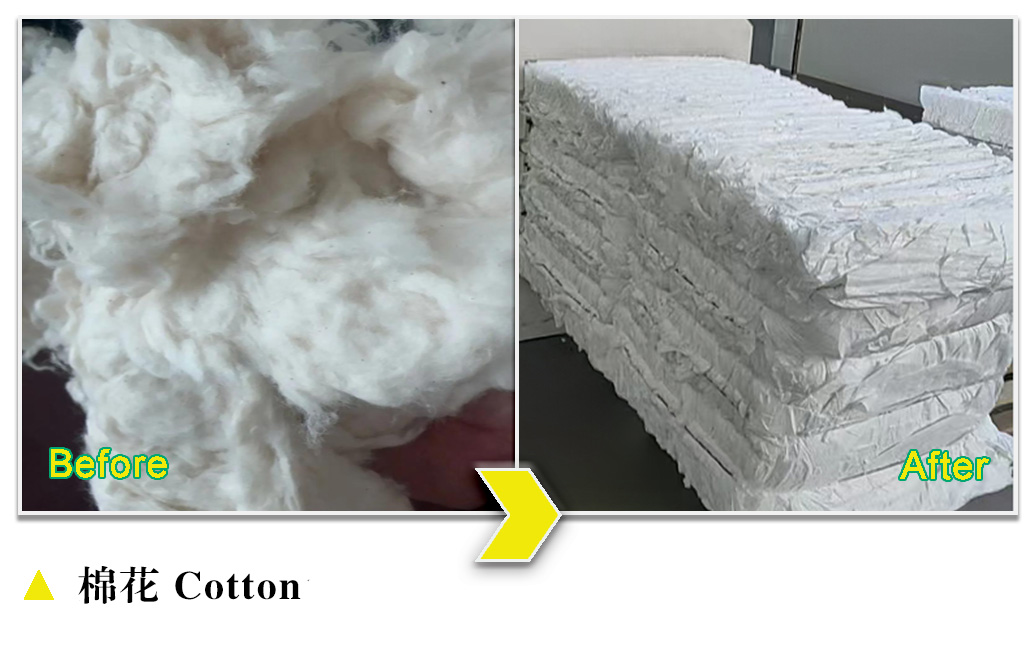
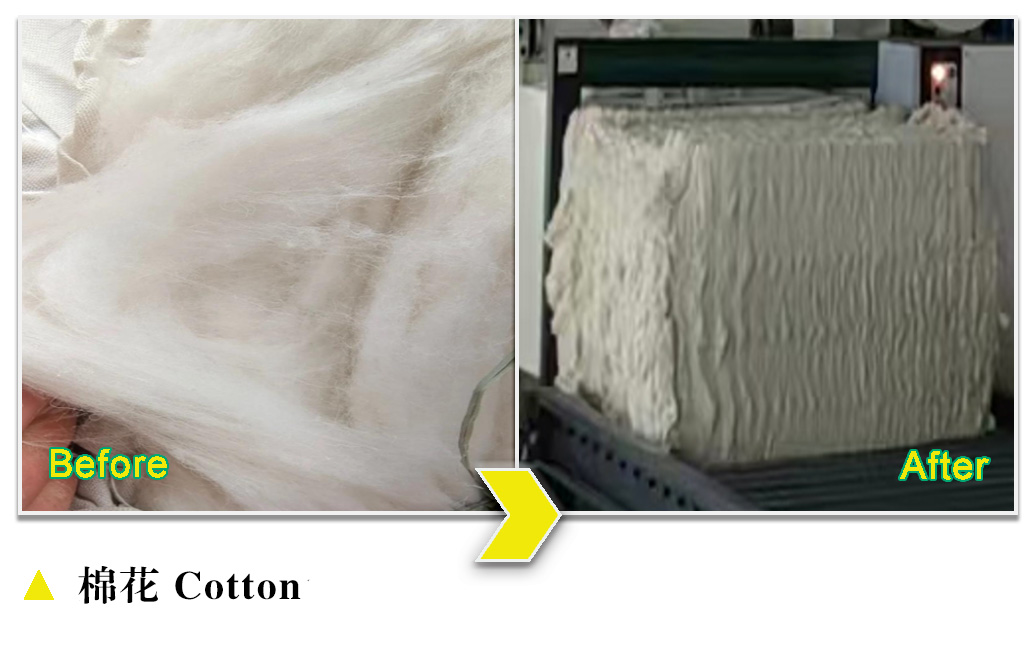
4. Integration into the Cotton Linter Purification Line
A modern purification plant can integrate the horizontal baler directly after the final fiber cutting or dust removal stage.
The typical layout is as follows:
5. Technical Highlights of GIGAPA Fully Automatic Horizontal Baler
For cotton linter and fiber material applications, GIGAPA’s fully automatic horizontal balers are designed with specific features that meet the industry’s needs:
- High-efficiency Hydraulic System: Provides stable and powerful compression for lightweight materials.
- Automatic Feeding and Strapping: Ensures continuous operation without manual interruption.
- PLC Intelligent Control: Adjustable compression time, pressure, and output settings for flexible production.
- Dust Control System: Keeps the workspace clean and maintains air quality.
- Energy-saving Design: Optimized motor and hydraulic circuits reduce energy consumption by 15–25%.
- Safety Protection: Includes automatic stop in case of overload or abnormal feeding.
These features make GIGAPA’s balers not only efficient but also reliable for long-term industrial use.
6. Environmental and Economic Benefits
Using an automatic horizontal baler contributes to both sustainability and profitability:
- Reduced Waste: Efficient compression minimizes packaging material and space requirements.
- Cleaner Operations: Less airborne fiber and dust lead to healthier working environments.
- Energy Optimization: Automated systems reduce idle time and electricity usage.
- Recycling Ready: Compressed cotton linters can be easily transported for secondary processing or reuse.
By improving both ecological and economic efficiency, the baler supports a more sustainable cotton purification industry.
7. Conclusion: A Smart Investment for Cotton Purification Lines
In the evolving cotton processing industry, automation and cleanliness are no longer optional — they are essential. The fully automatic horizontal baler is more than just a packing machine; it is a critical part of the smart, efficient, and hygienic cotton purification line.
From reducing labor and logistics costs to improving product quality and environmental safety, the horizontal baler delivers tangible benefits across the entire value chain.
Whether you are upgrading an existing cotton linter purification plant or designing a new facility, integrating a GIGAPA Fully Automatic Horizontal Baler ensures higher productivity, consistent output, and long-term operational reliability.