A continuous metal baler helps scrap metal recycling facilities improve processing efficiency by compressing loose metal scrap into dense, uniform bales without frequent interruptions for manual loading and unloading. As recycling businesses handle increasing volumes of metal waste, efficient material processing has become essential for reducing operating costs, optimizing storage space, and improving transportation efficiency.
From scrap yards and metal processing plants to automotive dismantling facilities and manufacturing workshops, a continuous metal baler provides an effective solution for handling large quantities of recyclable metal. By integrating continuous feeding, hydraulic compression, and automated bale discharge, this equipment helps streamline recycling operations and maximize the value of scrap metal.
But how exactly does a continuous metal baler improve recycling efficiency? Let’s explore its working principles, key benefits, applications, and the factors businesses should consider when selecting the right machine.
What Is a Continuous Metal Baler?
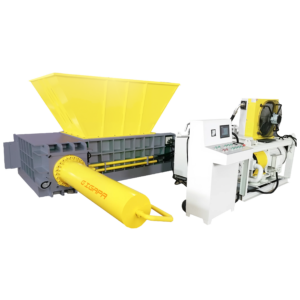
A continuous metal baler is an industrial hydraulic machine designed to compress loose metal scrap into compact, manageable bales. Unlike conventional balers that may require frequent stops for loading or unloading, a continuous metal baler is designed to support a more consistent material-handling process.
Depending on the machine configuration, operators can feed metal scrap into the compression chamber while the hydraulic system compresses the material into dense blocks. The finished bales are then discharged automatically or through the machine’s configured discharge mechanism.
Common materials processed by a continuous metal baler include:
- Aluminum scrap and aluminum profiles
- Steel offcuts and sheet metal scrap
- Metal shavings and machining waste
- Copper scrap and other non-ferrous metal waste
- Scrap generated by automotive and metal fabrication industries
- Lightweight metal packaging and industrial metal residues
The machine’s suitability depends on the material’s dimensions, shape, density, and processing characteristics. For businesses handling high volumes of recyclable metal, a properly selected continuous metal baler can become an important part of an efficient recycling system.
How Does a Continuous Metal Baler Improve Scrap Metal Recycling Efficiency?
-
Reduces Processing Interruptions
One of the main advantages of a continuous metal baler is its ability to support a steady material-processing workflow.
In traditional scrap metal processing, operators may need to stop the machine frequently to load additional material, remove finished bales, or prepare the next compression cycle. These interruptions can reduce overall productivity, particularly when processing large quantities of loose scrap.
A continuous metal baler helps minimize unnecessary interruptions through an integrated feeding and compression process. Depending on the design, material feeding and bale discharge can be coordinated with the machine’s operating cycle.
This arrangement allows recycling facilities to process material more consistently, reduce idle time, and make better use of available production hours.
For businesses that generate large amounts of metal scrap every day, improving workflow continuity can significantly enhance overall operational efficiency.
-
Increases Scrap Metal Density and Reduces Volume
Loose metal scrap often occupies considerable space because of its irregular shapes and inefficient stacking characteristics. Metal sheets, offcuts, and lightweight aluminum scrap can create large piles that are difficult to organize and transport.
A continuous metal baler uses hydraulic pressure to compress loose scrap into dense bales. This process reduces the material’s volume and makes the finished products easier to stack, store, and handle.
Higher-density bales offer several practical benefits:
- More efficient use of warehouse and scrap yard space
- Easier material stacking and inventory management
- Reduced handling difficulties
- Better utilization of truck or container capacity, subject to weight limits
- More convenient transportation to recycling plants and metal processors
The achievable bale density depends on the material type, machine specifications, and operating conditions. Nevertheless, effective compression helps businesses organize scrap more efficiently throughout the recycling process.
-
Improves Labor Productivity Through Automation
Labor requirements are another important factor affecting scrap metal recycling costs.
Manual loading, repeated material handling, and frequent intervention during compression can consume valuable working hours. These tasks may also expose employees to additional physical demands and workplace hazards.
A continuous metal baler can reduce repetitive manual operations by incorporating hydraulic controls, mechanized feeding, and automated functions where specified.
With a suitable configuration, operators can supervise the machine instead of performing every loading and compression task manually. This allows employees to focus on material sorting, equipment monitoring, quality control, and other important production activities.
Automation does not eliminate the need for trained operators or appropriate safety procedures. However, it can help businesses allocate labor more effectively and establish a more standardized recycling workflow.
-
Reduces Storage and Transportation Costs
Transportation and storage expenses can account for a significant share of the operating costs associated with scrap metal recycling.
Loose scrap is often difficult to stack efficiently, and irregular material shapes can leave unused space in storage areas and transport vehicles. As a result, businesses may need more storage capacity or additional trips to move the same quantity of recyclable material.
A continuous metal baler addresses this challenge by converting loose scrap into compact bales.
The resulting bales are generally easier to stack and handle, helping businesses improve storage organization and plan shipments more efficiently. Depending on the material density and vehicle payload limits, compacted scrap may also allow more material to be transported in each load.
For recycling companies that regularly ship metal scrap to downstream processors, these improvements can contribute to lower handling expenses and more efficient logistics.
Actual savings depend on transport distance, freight pricing, vehicle capacity, bale dimensions, and the type of scrap being processed.
-
Supports Consistent Bale Quality
Consistent bale dimensions and density can make scrap metal easier to handle, store, and transport.
A properly configured continuous metal baler helps standardize the compression process by applying controlled hydraulic force under defined operating conditions. This can produce more uniform bales than loosely piled or manually consolidated scrap.
Uniform bales simplify stacking and improve the organization of material inventories. They can also make loading and unloading procedures more predictable.
For recycling businesses supplying metal processors or other industrial buyers, bale consistency may help meet handling and delivery requirements.
However, the final bale quality depends on material composition, scrap size, moisture or contamination levels, machine settings, and the capabilities of the selected baler. Businesses should confirm the required bale dimensions and density before purchasing equipment.
-
Improves Overall Recycling Workflow
A continuous metal baler can also improve coordination between different stages of a recycling operation.
For example, a metal fabrication plant may generate scrap during cutting, stamping, machining, or manufacturing. Without an organized collection and compression system, scrap can accumulate around production areas and interfere with material movement.
Integrating a continuous metal baler into the scrap handling process allows businesses to establish a clearer workflow:
- Collect and sort recyclable metal scrap.
- Feed suitable materials into the baler.
- Compress the scrap into compact bales.
- Discharge and move finished bales to a designated storage area.
- Arrange transportation to recycling facilities or downstream processors.
When combined with appropriate conveyors, loading equipment, and material collection systems, the baler can help reduce unnecessary handling and improve coordination across the facility.


Key Applications of Continuous Metal Balers
-
Scrap Metal Recycling Yards
Scrap yards handle different types of metal waste collected from industrial facilities, demolition projects, and other sources. A continuous metal baler can help compress suitable scrap into compact bales, improving yard organization and preparing materials for transportation.
-
Metal Manufacturing Plants
Manufacturing operations often generate metal offcuts, sheet metal waste, and production residues. Installing a suitable baler can help control scrap accumulation and improve the efficiency of internal material handling.
-
Automotive and Machinery Industries
Automotive dismantling facilities and machinery manufacturers may produce metal components, stamping scrap, and other recyclable residues. A continuous metal baler can support more organized scrap collection and compression, provided the materials are compatible with the equipment.
-
Aluminum Processing Facilities
Aluminum scrap is often lightweight and irregularly shaped, making it difficult to store efficiently before processing. A suitable continuous metal baler can reduce scrap volume and simplify the handling of recyclable aluminum materials.
The machine must be selected according to the scrap’s dimensions, alloy or material characteristics, and the facility’s processing requirements.
How to Choose the Right Continuous Metal Baler
Selecting the right continuous metal baler requires more than comparing machine prices. Businesses should evaluate several technical and operational factors before making a decision.
Identify the Type of Metal Scrap
Different materials require different compression capabilities. Aluminum profiles, steel offcuts, copper scrap, and metal shavings vary in shape, density, and resistance to compression.
Provide the manufacturer with information about the materials you process, including photographs, dimensions, and any unusual characteristics.
Determine the Required Processing Capacity
Estimate how much scrap your facility generates per hour or per day. A machine with insufficient capacity may create a production bottleneck, while an unnecessarily large machine can increase equipment and operating costs.
Consider both current production needs and realistic future growth.
Check Bale Dimensions and Density
Determine the bale dimensions required by your storage area, transportation arrangements, or downstream buyers. Confirm whether the selected machine can produce bales that meet those requirements for your specific material.
Evaluate Automation Requirements
Consider whether your facility needs automatic feeding, automatic bale discharge, conveyor integration, or other auxiliary equipment.
A higher level of automation may improve productivity, but the additional investment should be justified by the expected workload and labor savings.
Review Hydraulic Performance and Maintenance
The hydraulic system is central to the machine’s compression performance. Ask about hydraulic pressure, motor power, cycle characteristics, maintenance requirements, and the availability of spare parts.
Also evaluate safety protections, operator controls, technical support, and the manufacturer’s experience in metal recycling equipment.
Conclusion
A continuous metal baler can improve scrap metal recycling efficiency by supporting a more consistent processing workflow, reducing loose scrap volume, improving labor productivity, and making storage and transportation more manageable.
For recycling yards, metal fabrication plants, and industrial facilities handling substantial quantities of recyclable metal, the right baling equipment can help create a more organized and cost-effective recycling operation.
The key is to choose a machine that matches your scrap characteristics, processing capacity, bale requirements, and automation goals.