-200x45.png)
Choosing the right vertical baler is an important decision for businesses that generate cardboard, paper, plastic, textiles, packaging waste, and other recyclable materials. A suitable baler can reduce waste volume, improve storage efficiency, lower transportation costs, and make daily waste handling more organized.
However, different businesses have different waste types, production volumes, bale size requirements, and working environments. Choosing a machine based only on price or pressing force may result in poor performance or unnecessary investment.
So, how do you choose the right vertical baler for your business? This guide explains the key factors you should consider before purchasing a vertical hydraulic baler.
What Is a Vertical Baler?
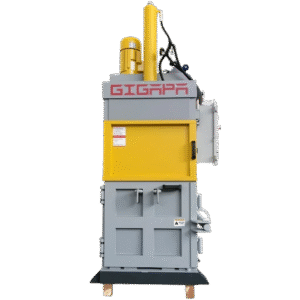
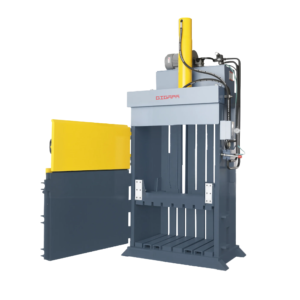
A vertical baler is a hydraulic or mechanical baling machine designed to compress recyclable and waste materials into compact bales. Unlike horizontal balers, vertical balers generally require less floor space and are often suitable for small and medium-sized businesses.
A vertical hydraulic baler typically uses a hydraulic cylinder to generate pressing force. The material is loaded into the chamber, compressed by the pressing plate, and then tied with straps or wire after reaching the desired density.
Depending on the machine design, a vertical baler can be used for:
- Cardboard and waste paper
- Plastic film and plastic bottles
- Textile and clothing waste
- PET bottles
- Packaging materials
- Agricultural waste
- Industrial production waste
- Soft and lightweight recyclable materials
For businesses with limited space but regular recyclable waste, a vertical baling machine can be a practical solution for waste volume reduction.
1. Start With Your Material
The first question to ask is: what material do you need to bale?
Different materials have different characteristics. Cardboard is commonly processed with a cardboard vertical baler, while plastic film, textiles, and other flexible materials may require different compression settings.
Before contacting a manufacturer, prepare information about:
- Material type
- Material size
- Material density
- Moisture content
- Whether the material is loose or pre-processed
- Expected bale weight
If possible, provide photos or videos of the material. This can help the manufacturer understand your application and recommend a suitable vertical baling machine.
2. Calculate Your Daily Capacity
The amount of material you need to process is another important consideration.
A small retail store may only generate a few hundred kilograms of cardboard per day, while a recycling center or manufacturing facility may handle several tons.
Choosing a machine that is too small may increase operating time and labor costs. Choosing a machine that is much larger than necessary may increase your initial investment.
Consider:
- Daily waste volume
- Working hours per day
- Required number of bales
- Desired bale weight
- Expected future production
It is usually better to choose a machine that matches your actual workload while allowing some room for future growth.
3. Check the Pressing Force
Pressing force is an important specification when comparing a vertical baler.
Different materials require different levels of compression. For example, cardboard and paper can generally be compressed differently from dense industrial materials.
However, a higher pressing force does not automatically mean a better machine. The hydraulic cylinder, pump, motor, chamber size, machine frame, and overall design should work together.
Instead of simply asking for the machine with the highest tonnage, tell the supplier your material type, daily capacity, and desired bale weight. The manufacturer can then recommend an appropriate pressing force.
4. Consider Bale Size and Weight
Bale size affects storage, handling, and transportation.
Before purchasing a vertical baler, determine the bale dimensions and weight that are suitable for your business. You should also check whether your recycling company or downstream customer has specific bale requirements.
Important questions include:
- What bale size do you need?
- What bale weight is convenient for handling?
- How will the bales be transported?
- How much storage space is available?
- Does your recycler have bale specifications?
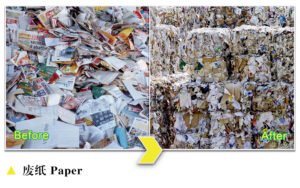
Compact and properly compressed bales can make storage and transportation more efficient.

5. Measure Your Available Space
One major advantage of a vertical baler is its relatively compact design.
However, you should measure the installation area before ordering. Do not consider only the machine footprint. Operators also need enough space to load material, tie bales, remove finished bales, and perform maintenance.
Check:
- Machine dimensions
- Ceiling height
- Loading area
- Bale discharge area
- Operator space
- Maintenance access
- Door and transportation access
This is especially important for warehouses, retail stores, workshops, and recycling facilities where floor space is limited.
6. Choose the Right Level of Automation
Your production volume and available labor should determine the level of automation.
For businesses with a relatively small amount of waste, a manually operated vertical baler may be sufficient. The operator loads the material, starts the compression cycle, and ties the bale.
For higher volumes, a semi-automatic baling machine can reduce labor requirements and improve productivity.
When comparing machines, consider not only the purchase price but also labor costs, operating efficiency, maintenance, and long-term use.
7. Pay Attention to Safety and Maintenance
Safety is essential when selecting industrial baling equipment.
A suitable vertical baler should have appropriate safety functions for its design and operating method. Depending on the model, these may include emergency stop functions, safety switches, protected operating areas, and other safety devices.
Maintenance is also important. Ask the manufacturer about:
- Hydraulic system maintenance
- Spare parts availability
- Recommended maintenance intervals
- Wear parts
- Technical support
- Warranty
- Operator training
For international buyers, reliable after-sales support can be particularly important.
8. Compare the Total Cost
The cheapest machine is not always the most suitable choice.
When purchasing a vertical baler, consider the total cost of ownership, including:
Machine price + shipping + installation + labor + energy + maintenance + spare parts
A machine with a higher initial price may provide better productivity or longer service life, while an inexpensive machine may not meet your production requirements.
For international purchases, also confirm shipping dimensions, machine weight, packaging, delivery time, and trade terms such as EXW or FOB.
9. Work With an Experienced Manufacturer
A professional vertical bale manufacturer should be able to recommend equipment according to your actual application.
When requesting a quotation, provide:
- Material type
- Material photos or videos
- Daily processing volume
- Desired bale size
- Desired bale weight
- Available installation space
- Power supply
- Destination country
- Required automation level
The more complete your information is, the easier it is for the supplier to provide an accurate recommendation and quotation.
Conclusion
Selecting the right vertical baler starts with understanding your own application. Material type, processing capacity, bale size, pressing force, available space, automation, safety, and after-sales service should all be considered before making a purchase.
For businesses handling cardboard, paper, plastic, textiles, and other recyclable materials, a properly selected vertical baling machine can help reduce waste volume, save storage space, improve transportation efficiency, and streamline daily waste management.
GIGAPA provides vertical baler solutions for different recycling and waste-handling applications. If you are looking for a vertical hydraulic baler, send us your material information, required capacity, bale size, and other requirements. Our team can recommend a suitable machine for your business.