-200x45.png)
The Old Clothes Single-Shaft Shredder has become an essential piece of equipment in the modern textile recycling industry as global awareness of environmental protection continues to grow. With millions of tons of discarded clothing, fabric scraps, shoes, carpets, and household textiles generated every year, efficient recycling solutions are more important than ever. Traditional disposal methods, such as landfilling and incineration, not only waste valuable resources but also create significant environmental challenges. As governments and businesses increasingly focus on sustainability and circular economy initiatives, the demand for advanced textile recycling equipment like the Old Clothes Single Shaft Shredder continues to rise.
To address this issue, recycling companies, waste management facilities, textile manufacturers, and charitable organisations are increasingly investing in advanced recycling equipment. Among various recycling machines available today, the Old Clothes Single Shaft Shredder has emerged as one of the most reliable and efficient solutions for processing used garments and textile waste.
What is an old clothes single-shaft shredder?
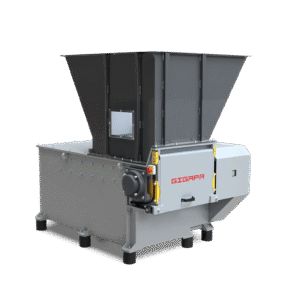
An Old Clothes Single Shaft Shredder is a heavy-duty recycling machine specifically designed to reduce the size of textile waste materials. It utilises a rotating shaft equipped with specially designed cutting blades that work against a stationary counter knife to shred materials into smaller, uniform pieces.
The machine is widely used for processing:
- Used clothing
- Waste garments
- Textile scraps
- Cotton fabrics
- Polyester fabrics
- Denim waste
- Leather products
- Shoes and handbags
- Carpet waste
- Non-woven fabrics
- Industrial textile waste
The shredded output can then be reused in various recycling processes, including fibre recovery, insulation material production, RDF fuel manufacturing, stuffing materials, and other secondary applications.
Why Textile Recycling Is More Important Than Ever
The fashion and textile industry is one of the world’s largest contributors to waste generation. According to industry reports, millions of tons of textile waste are discarded annually, with a significant percentage ending up in landfills.
Key challenges include:
-
Growing Textile Waste Volumes
Fast fashion trends have significantly shortened clothing lifecycles, leading to higher disposal rates.
-
Environmental Impact
Discarded textiles require large landfill spaces and may release harmful substances during decomposition.
-
Resource Conservation
Many textile products contain valuable fibres that can be recovered and reused instead of being wasted.
-
Circular Economy Development
Governments and industries worldwide are promoting circular economy initiatives that encourage recycling and material recovery.
An old clothes single-shaft shredder plays a critical role in transforming waste textiles into reusable resources.
Working Principle of an Old Clothes Single-Shaft Shredder
The machine operates through a highly efficient shredding mechanism.
-
Material Feeding
Old clothes and textile waste are loaded into the hopper manually or through a conveyor system.
-
Hydraulic Pushing System
A hydraulic ram continuously pushes materials toward the rotating rotor, ensuring stable feeding and consistent shredding performance.
-
Rotor Cutting System
The rotor is equipped with high-strength knives that rotate at a controlled speed. The material is cut and torn between the rotor blades and the stationary knives.
-
Screen Control
A screen installed beneath the rotor controls the output size. Materials remain inside the shredding chamber until they are small enough to pass through the screen openings.
-
Discharge
The shredded textile pieces are discharged for further processing, baling, or recycling.
Main Features of an Old Clothes Single Shaft Shredder
-
High-Efficiency Shredding
The machine can process large volumes of textile waste continuously, significantly improving productivity.
-
Uniform Output Size
The screen system ensures consistent particle size, making the shredded material suitable for downstream recycling applications.
-
Heavy-Duty Construction
Manufactured with robust steel structures, the machine is designed for long-term industrial operation.
-
Low Operating Noise
Compared with some high-speed crushers, single-shaft shredders operate at lower speeds, reducing noise levels.
-
Automatic Control System
PLC control systems provide automated operation, overload protection, and easy monitoring.
-
Wear-Resistant Blades
High-quality alloy steel blades ensure long service life and reduced maintenance costs.
-
Energy Efficiency
Optimized drive systems help reduce power consumption while maintaining high output.
Materials Suitable for Processing
One of the biggest advantages of a single-shaft shredder is its versatility.
The machine can effectively process:
Used Clothing
- T-shirts
- Jackets
- Shirts
- Sweaters
- Uniforms
- Sportswear
Fabric Waste
- Cotton fabrics
- Polyester fabrics
- Mixed textiles
- Denim
- Wool fabrics
Household Textiles
- Bedsheets
- Curtains
- Towels
- Blankets
- Quilts
Leather and Footwear
- Leather garments
- Shoes
- Handbags
- Belts
Industrial Textile Waste
- Manufacturing offcuts
- Production rejects
- Textile trimming waste
Advantages of Using an Old Clothes Single-Shaft Shredder
-
Reduce Waste Disposal Costs
Shredding significantly reduces material volume, lowering transportation and landfill expenses.
-
Improve Recycling Efficiency
Uniform shredded material is easier to sort, process, and recycle.
-
Increase Resource Recovery
More reusable fibers can be recovered from shredded textile waste.
-
Enhance Workplace Safety
Automated feeding and shredding systems reduce manual handling risks.
-
Support Sustainability Goals
The machine helps businesses achieve environmental compliance and sustainability targets.
-
Generate Additional Revenue
Recycled textile materials often have commercial value, creating new income opportunities.
How to Choose the Right Old Clothes Single Shaft Shredder
Selecting the proper machine depends on several factors.
Processing Capacity
Determine your required throughput, such as:
- 300–500 kg/h
- 500–1000 kg/h
- 1000–3000 kg/h
- Higher customized capacities
Material Type
Different textiles may require different blade configurations.
Output Size Requirements
Choose screen sizes based on downstream recycling processes.
Automation Level
Consider whether conveyors, automatic feeding, and PLC systems are required.
Blade Material
High-quality alloy steel blades provide better durability and lower maintenance costs.
Motor Power
Select a machine with sufficient power for your application while maintaining energy efficiency.
Manufacturer Experience
Work with experienced manufacturers that provide technical support, spare parts, and after-sales service.
Why Choose GIGAPA Old Clothes Single-Shaft Shredder?
GIGAPA specialises in the design and manufacture of advanced recycling and waste processing equipment. Our Old Clothes Single Shaft Shredder is engineered to deliver reliable performance, high productivity, and long service life.
Key Advantages
✔ Heavy-duty industrial design
✔ High-efficiency hydraulic pushing system
✔ Wear-resistant alloy steel blades
✔ Stable and uniform shredding performance
✔ PLC automatic control system
✔ Customizable capacity and output size
✔ Professional technical support
✔ Global delivery and after-sales service
Whether you operate a textile recycling facility, garment factory, waste management company, or RDF production plant, GIGAPA can provide the right shredding solution for your business.
Conclusion
As the global textile industry continues to generate increasing amounts of waste, efficient recycling solutions have become essential for both environmental protection and resource recovery. An Old Clothes Single-Shaft Shredder provides a reliable and cost-effective way to process used clothing, fabric scraps, shoes, carpets, and other textile materials into manageable sizes for further recycling.
With its high shredding efficiency, durable construction, uniform output size, and wide range of applications, the machine helps recycling companies, garment manufacturers, and waste management facilities reduce disposal costs while maximizing the value of recyclable materials. By converting textile waste into reusable resources, businesses can support sustainability goals, comply with environmental regulations, and contribute to the development of a circular economy.